Showing posts with label sculptures. Show all posts

The Floating Baby At Gardens By The Bay Singapore

Posted by : foongpc | Friday, August 7, 2015 | Published in

ADVERTISEMENT


I first visited Gardens By The Bay in Singapore during Christmas Day back in December, 2012.  Read about it HERE.

A year later on Christmas Eve 2013, I revisited this famous tourist attraction in the island republic. One reason I went to Gardens By The Bay again was because I did not get to see the Floating Baby during my first visit. Of course, there were other reasons but the floating baby was the main reason.

 photo P1230805_zpsun619hyk.jpg

I did not research where this baby was located before my trip, so I had to be adventurous and walked the whole of the gardens to find it. (By the way, in case you do not know, the garden is HUGE - the whole park spanning about 101 hectares!)

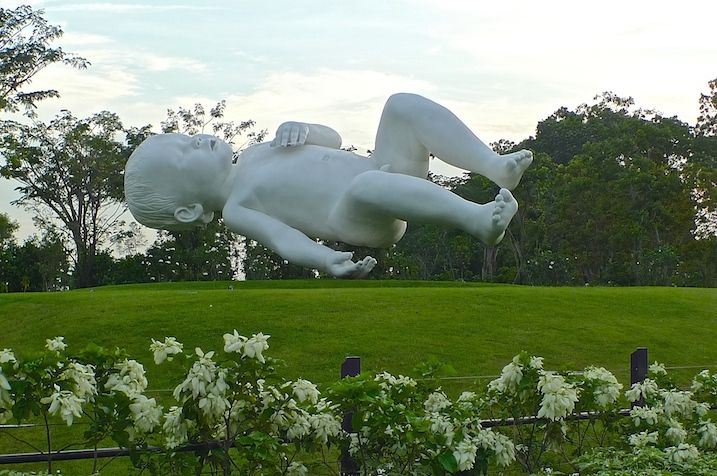
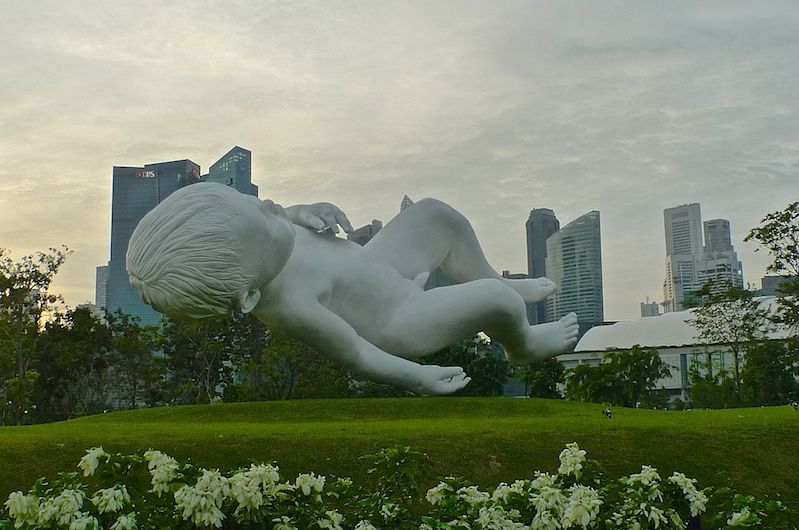
When I did find it, it was a little shocking, because the baby was just so .... gigantic! And it seemed to be floating on air, right there in front of my eyes! Almost unbelievable!

 photo P1230808_zpsgmwrdjai.jpg

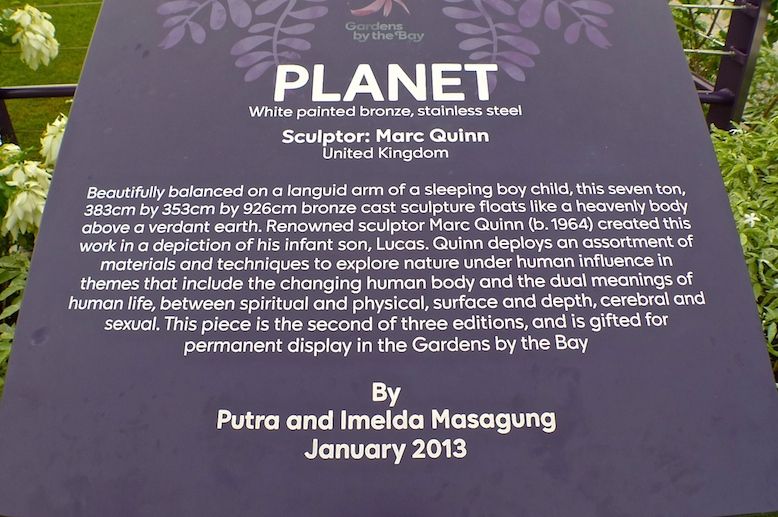
At 9 metres long and 3 metres tall and weighing about 7 tons, this huge piece of art seems to defy the laws of gravity.  However, I'm afraid my photos cannot do justice to the real thing, and besides it was late evening and the lighting was not very conducive for taking pictures with my camera.

Anyway, this floating baby sculpture is called 'Planet'. Located at The Meadow, this white painted bronze sculpture is the works of British artist Marc Quinn. You can read about it below.

 photo P1230807_zpsfkvtvswx.jpg

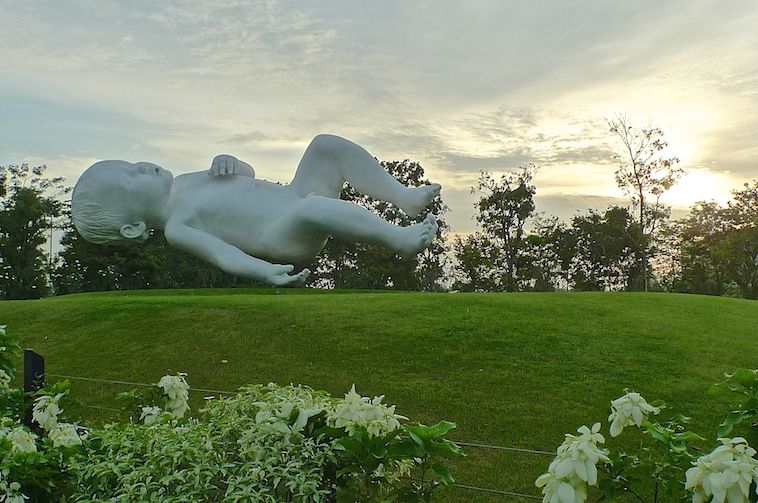
If you look carefully, the baby is not really floating. One hand is resting on the ground although at first sight, you won't notice it. I guess the artist must have masterfully balanced the heavy sculpture on just that one hand alone. Amazing!

 photo P1230810_zpsa7effppn.jpg

I took a different angle shot of the baby.

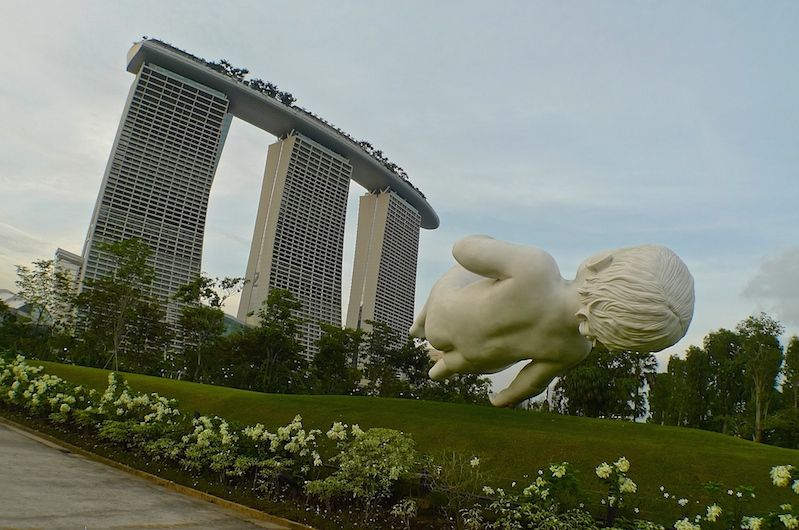
 photo P1230811_zps01uhnqye.jpg

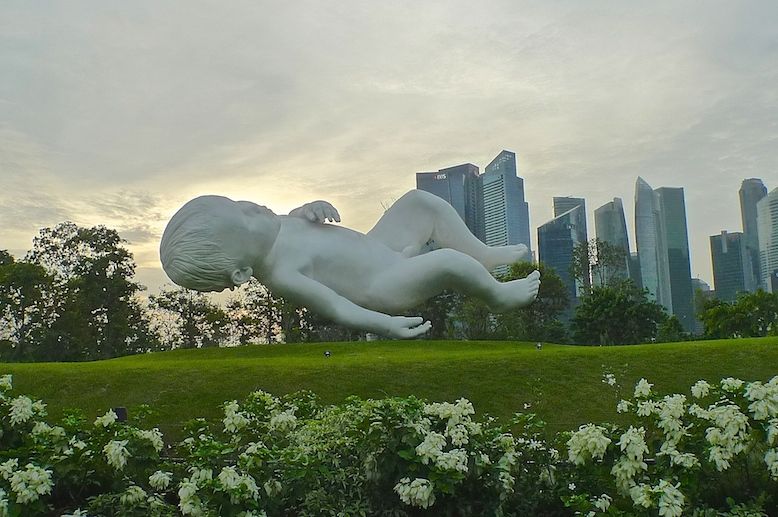
The giant floating baby with Marina Bay Sands in the background.

 photo P1230812_zpschi88plz.jpg

There are many more art sculptures in The Gardens, but this floating baby is the most impressive to me. More about Gardens By The Bay in my next post so stay tuned!

The Steel Rod Sculptures Of George Town, Penang

Posted by : foongpc | Tuesday, April 8, 2014 | Published in

ADVERTISEMENT


Besides the murals, there is another type of street art in Penang known as steel rod sculptures.

During my 4-day trip in Penang last year, I managed to capture some photos of the murals and the steel rod sculptures in George Town. Read about the murals in my previous post.

The steel rod sculptures are really a collection of caricatures by local cartoonists depicting the history of the streets where they are located. I guess it's more fun to learn about the history of George Town in this way.

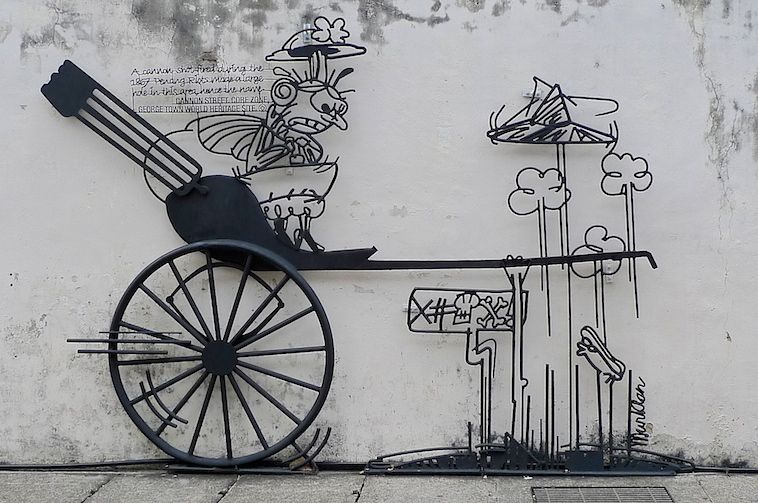
This sculpture below is located at Cannon Street based on a caricature by cartoonist Tang Mun Kian. It shows a trishaw peddlar falling into a hole on the ground while the passenger looks on in astonishment. It's actually a comical depiction about a cannon shot fired during the 1867 Penang riots  that made a large hole in this area. Now you know why this street is known as Cannon Street? : )

 photo P1220682_zpsd41bf527.jpg

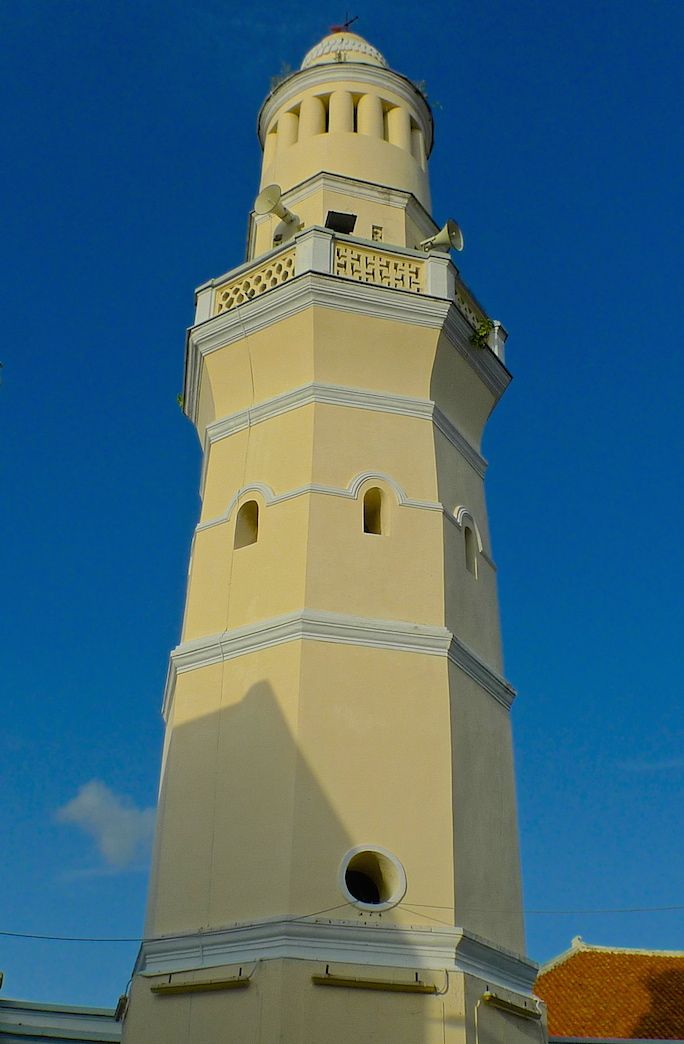
However, the hole was said to be not on the ground, but on the wall of the minaret of Acheen Street Mosque (Masjid Lebuh Acheh)! I managed to take a photo of the said mosque. Can you see the hole?

 photo P1220293_zpscc0e39da.jpg

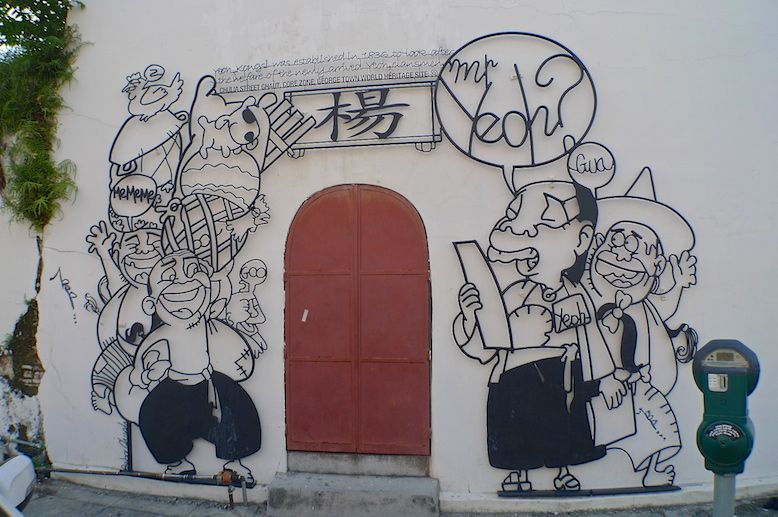
I saw this on the wall of Yeoh Kongsi along Chulia Street Ghaut. Based on the caricature of cartoonist Baba Chuah, it depicts a group of newly arrived immigrants received by their host. The Yeoh Kongsi was established in 1836 to look after the welfare of the newly arrived Yeoh clansmen.

 photo P1220338_zps61e21361.jpg

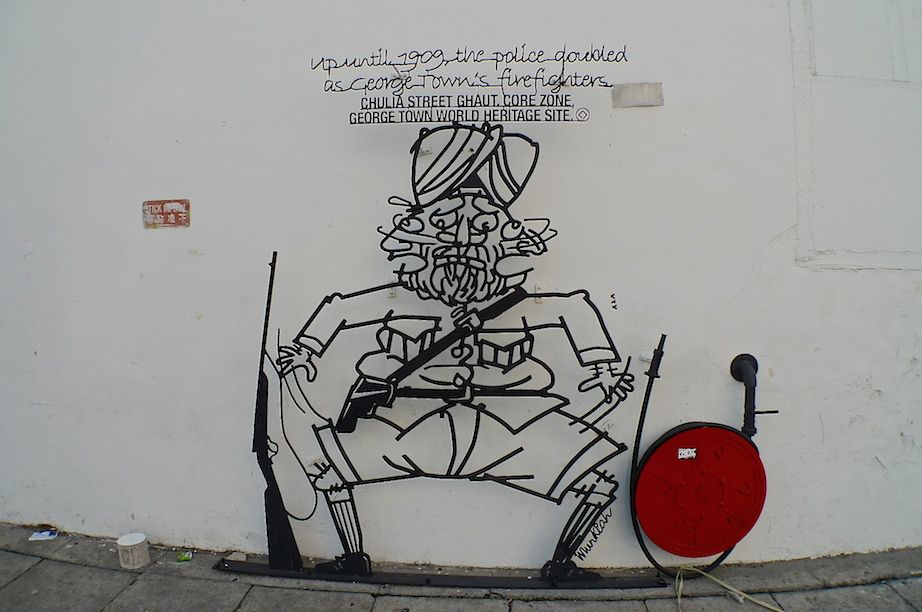
Did you know that up till the year 1909, the police in George Town also doubled up as fire fighters? This was clearly depicted in this steel rod sculpture on a wall along Chulia Street Ghaut.

 photo P1220341_zps5d68dca8.jpg

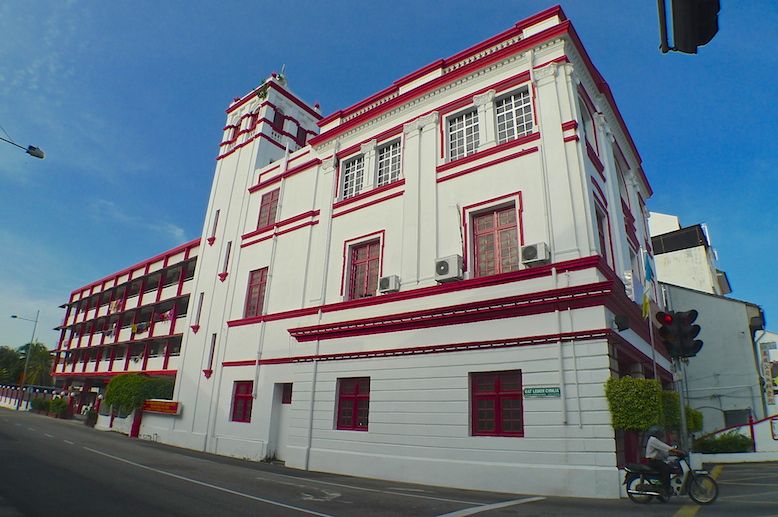
Based on the caricature by cartoonist Tang Mun Kian, this sculpture complete with a red firehose barrel celebrates the Beach Street Fire Station (Balai Bomba Lebuh Pantai) in George Town. (photo below)

 photo P1220344_zps085216ff.jpg

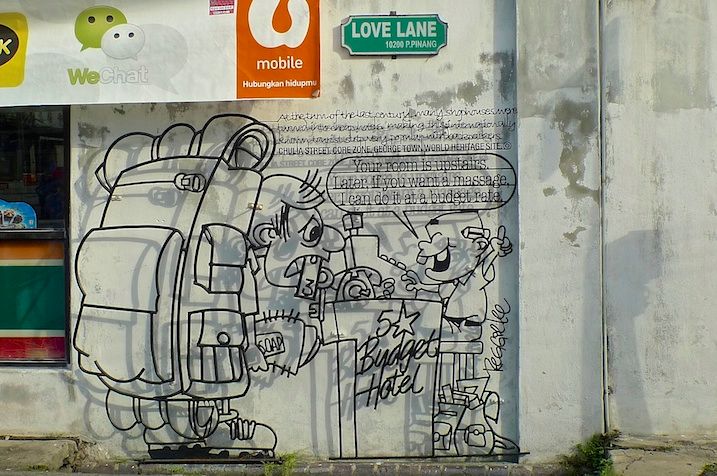
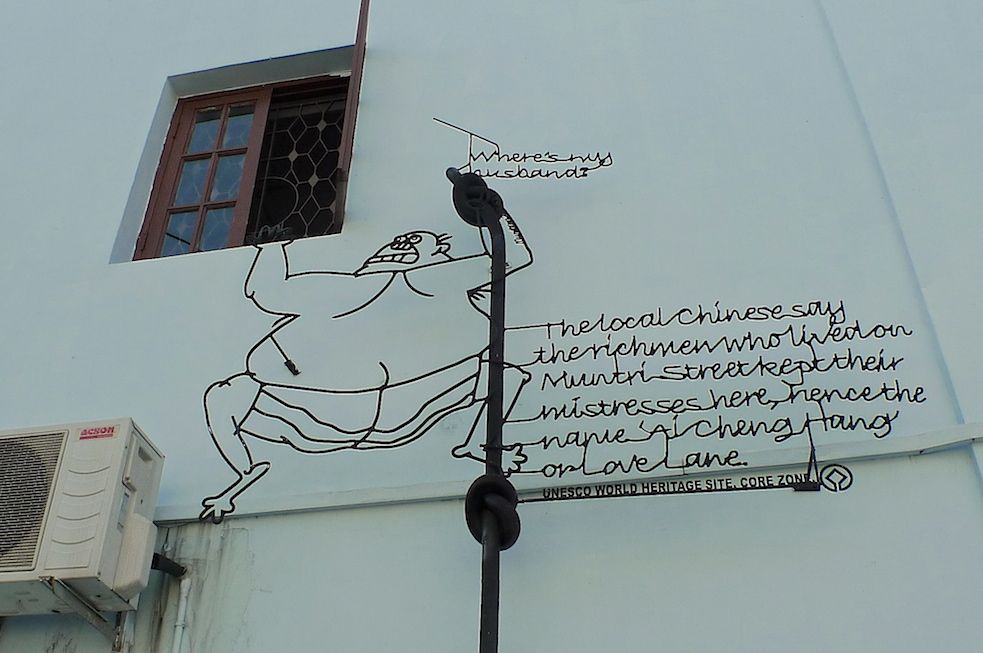
There are many shophouses turned budget hotels at Love Lane and this is celebrated with this steel rod sculpture on a wall along Love Lane. Based on a caricature by cartoonist Reggie Lee, it depicts a rather comical budget hotel scene.

 photo P1220352_zps7392bc75.jpg

My photo is not very clear, so in case you can't read what the cashier said to the tourist, well this is what he said : "Your room is upstairs. Later, if you want a massage, I can do it at budget rate." LOL!

There's another steel rod sculpture along Love Lane which seems to describe this street pretty well. Based on the caricature by cartoonist Tang Mun Kian, it depicts a man climbing down the wall from a window apparently to escape from a raid.

 photo P1220353_zpsdbf8470d.jpg

It is widely believed that in those days, rich men who lived at nearby Muntri Street kept their mistresses in the houses at Love Lane.

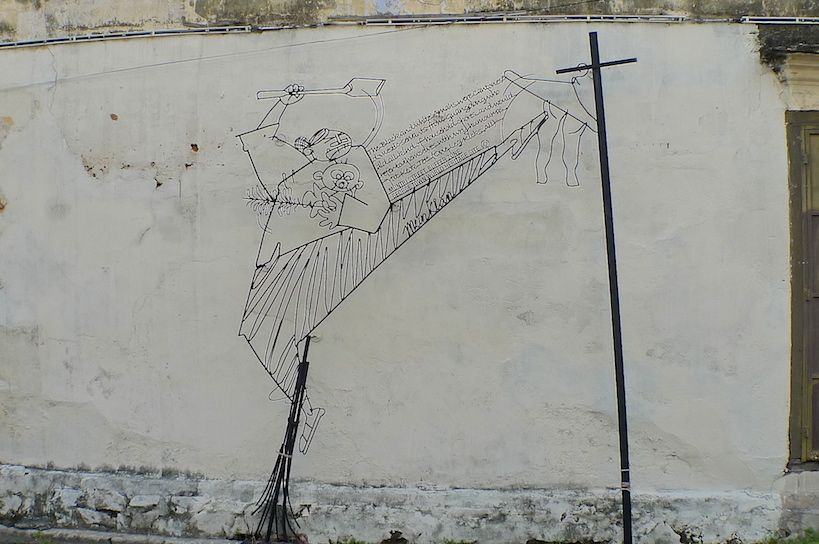
On a wall facing Muntri Street, I saw this 'one leg kicks all' steel rod sculpture based on another caricature by cartoonist Tang Mun Kian. It celebrates the amah or Chinese housemaids.

 photo P1220354_zps5069349b.jpg

These amahs, which came from Guangdong Province in China, did almost everything in the household, from cleaning to cooking to taking care of the children, hence they are known as 'yat keok thek' which in Cantonese means 'one leg kicks all'.

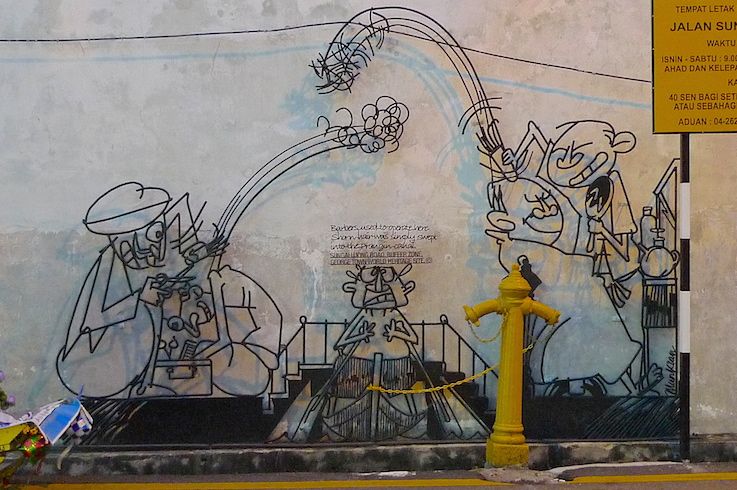
This steel rod sculpture at Sungai Ujong Road depicts two barbers on opposite sides of the then Prangin canal throwing locks of cut hair into the canal, to the bewilderment of a boatman passing through.

 photo P1220632_zps2ece3338.jpg

Based on yet another caricature by cartoonist Tang Mun Kian, the sculpture celebrates the barbers who lined up on both side of the canal to ply their trade in those days.

There were many more steel rod sculptures which I have missed or did not take photos of because it was too dark by then, but if you are interested, the complete list can be found at Timothy Tye's Penang Travel Tips website.

I still prefer murals compared to these steel rod sculptures but the latter do provide some comic relief during my walk around the streets of George Town.

The Erawan Museum In Bangkok (Part 3)

Posted by : foongpc | Monday, June 10, 2013 | Published in

ADVERTISEMENT


Continued from Part 2

After spending almost an hour inside the amazing Erawan Museum, my friend and I stepped outside to have some fresh air.

From here, I could see the Elephant's trunk and tusks above the building. Moments ago, we were actually inside the Elephant's belly. If you missed that part, click HERE to read all about it.

 photo P1190521_zps9294b908.jpg

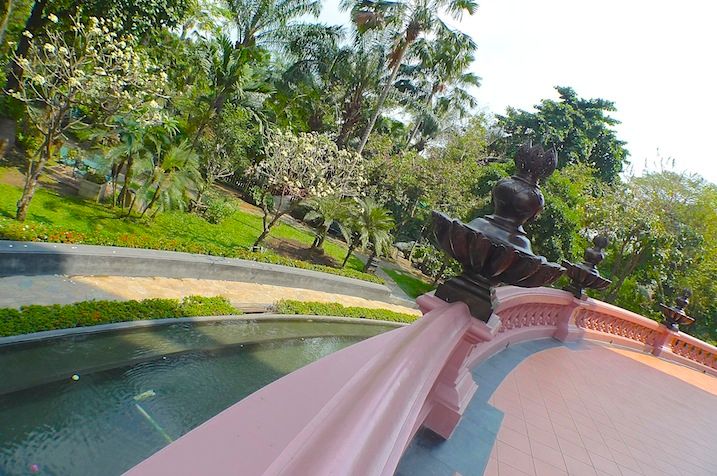
There's a large tropical flower garden surrounding the Museum building. We planned to take a stroll in the garden.

 photo P1190526_zps3be3e14d.jpg

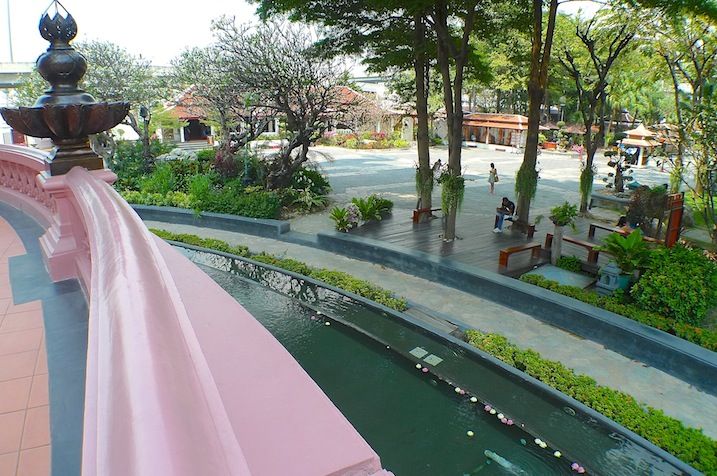
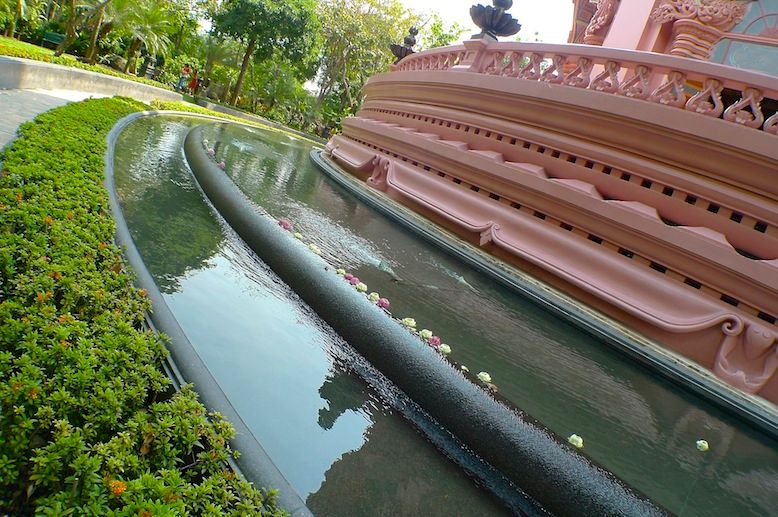
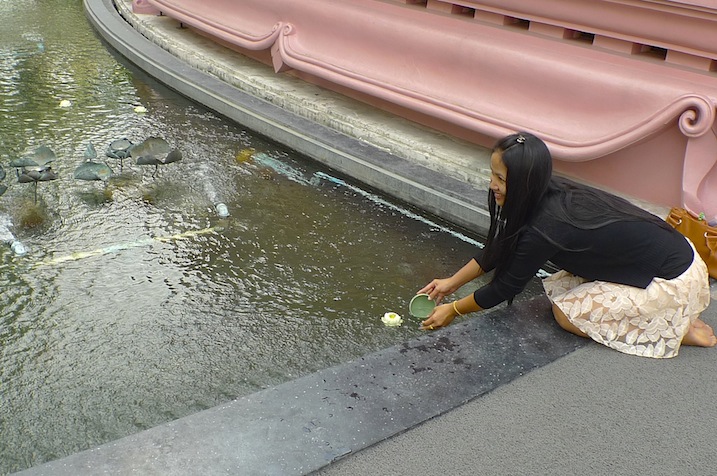
The stream circling the building was designed for visitors to float the lotus flowers. Read about the purpose for floating the lotus flowers in Part 1.

 photo P1190528_zps513eb33c.jpg

We were now outside the building and walking along the stream circling the building.

 photo P1190534_zps42bc16ae.jpg

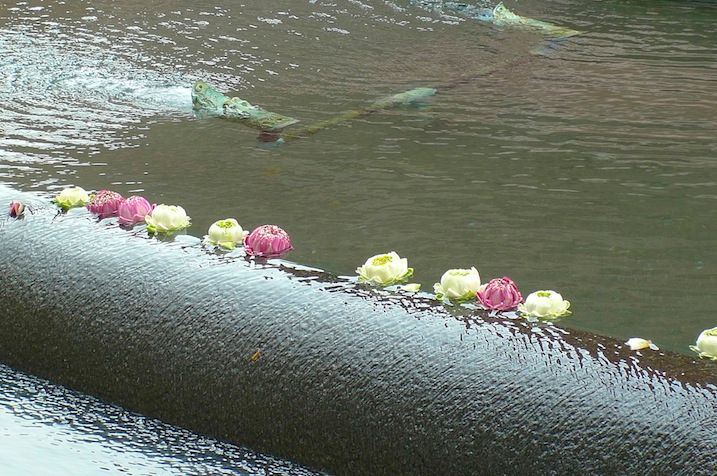
Can you see the lotus flowers? A lot of them got trapped here and did not continue to float along with the water flow. I think that's what happened to my lotus flower!

 photo P1190533_zpsb16cf0fa.jpg

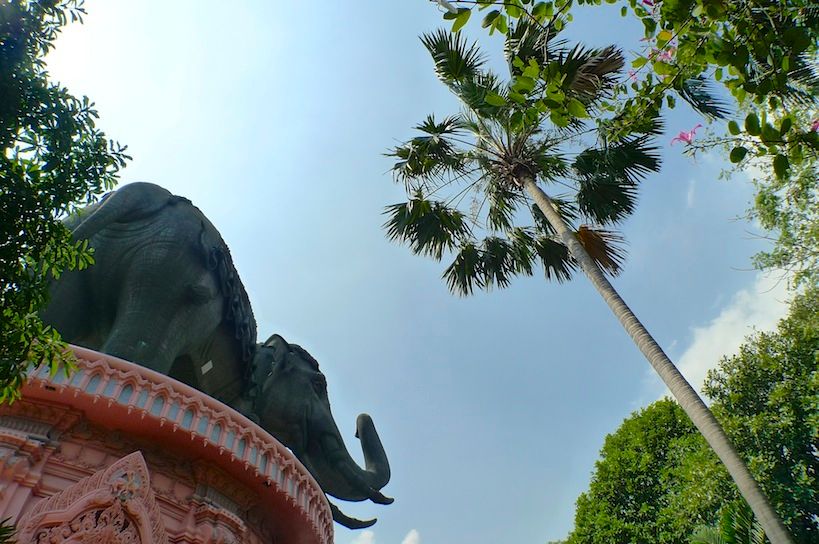
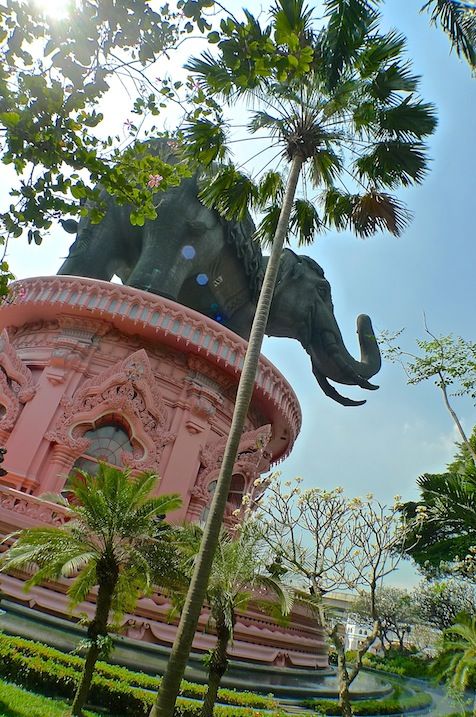
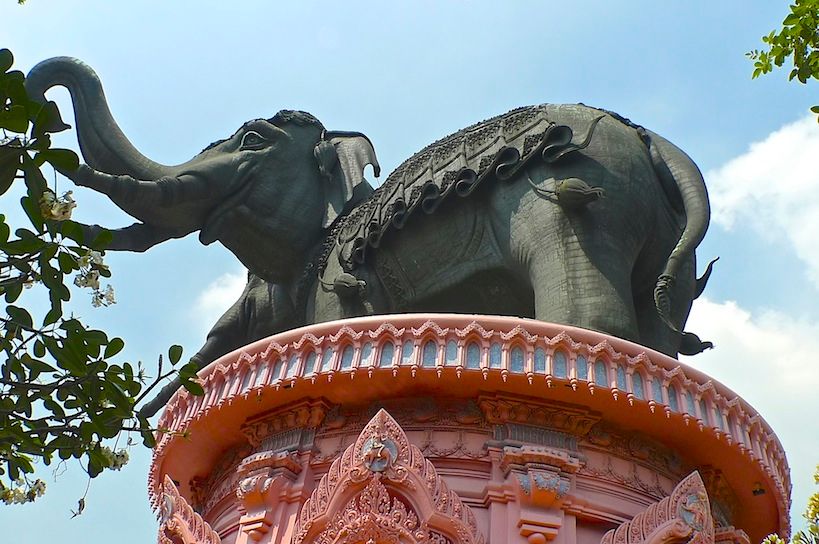
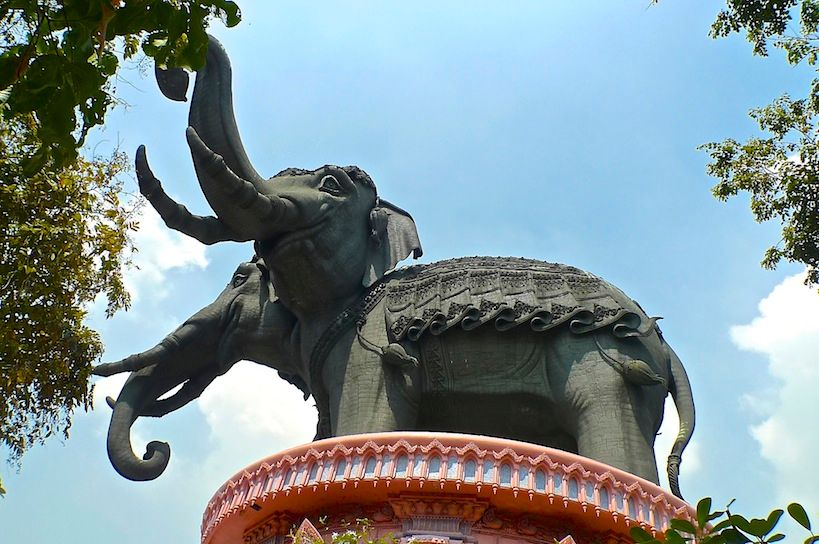
The sight of the gigantic three-headed Elephant on top of the pink building still amazed me despite having stepped inside its belly!

 photo P1190544_zpsd072b643.jpg

Anyway, I would just like to share with you some amazing statistics regarding this giant Elephant.

Total height of the building and the Elephant  43.6 metres
Height of the Elephant  29 metres
Width of the Elephant  12 metres
Length of the Elephant  39 metres
Weight of the Elephant's body  150 tons
Weight of the Elephant's head  100 tons

 photo P1190547_zpsd5367199.jpg

Did you know pure copper was chosen for the surface of the Elephant due to its high durability and heat emissive capacity? The copper's malleability also makes it easy to temper into shape.

 photo P1190561_zpsc84404db.jpg

The structure of the torso and the head of the Elephant were made from H- and I-shaped steel rods joined together. The legs were made of reinforced concrete to support the weight of the Elephant.

 photo P1190562_zpsa5cb86d5.jpg

The construction of the Erawan Museum including the Elephant took about 10 years in the making starting from the year 1994 when the foundations of the Erawan Museum was laid. By the year 2003, the Museum was finally completed.

 photo P1190564_zps74b9a1ef.jpg

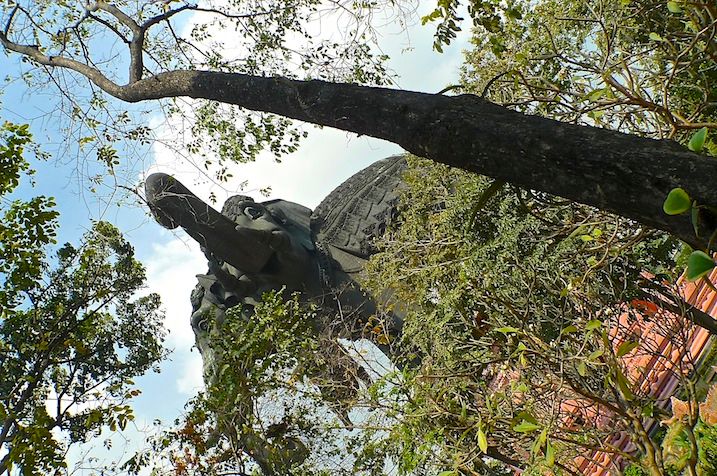
I took this photo from the tropical garden surrounding the Museum building. I did not manage to find a spot where I could view all the three heads of the Elephant properly.

 photo P1190569_zps24e4276b.jpg

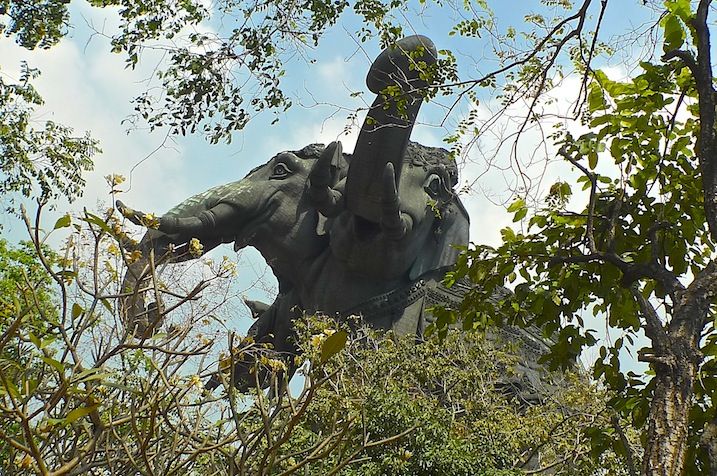
I like this photo below because it seems as if the three-headed 'beast' had just appeared out of nowhere in the middle of a jungle!

 photo P1190577_zpsb6199efa.jpg

Please excuse my indulgence in these Elephant photos. I think I got carried away snapping shots of it. LOL!

 photo P1190580_zpsdf1e1a2e.jpg

OK, enough with the Elephant. Let's tour the garden a bit.

 photo P1190548_zps8af8f2a6.jpg

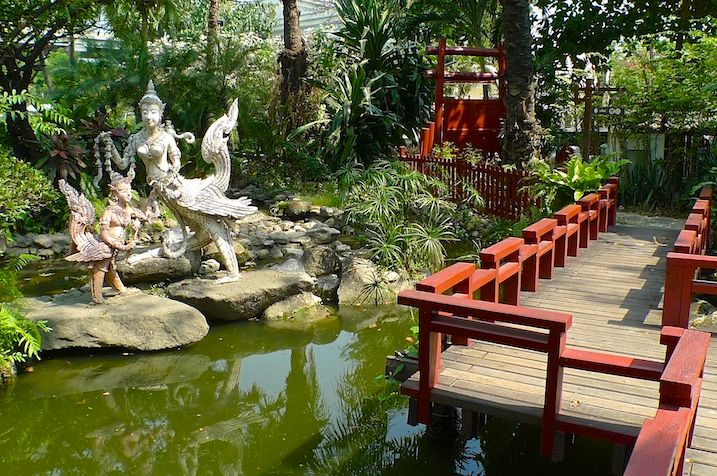
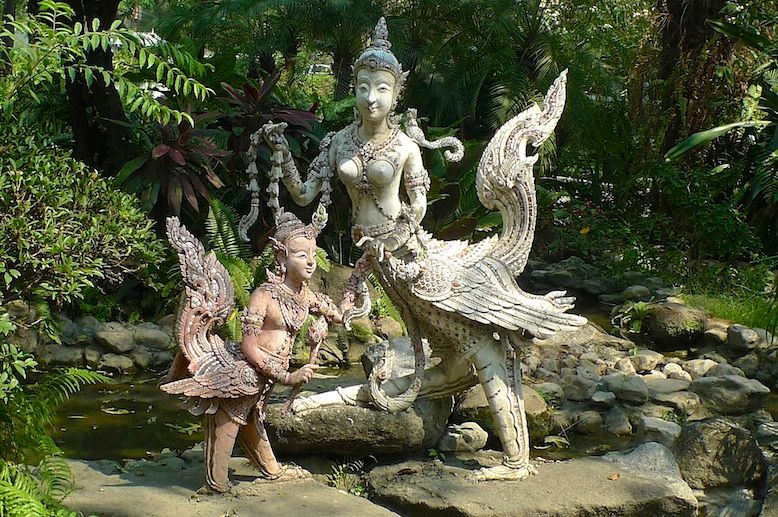
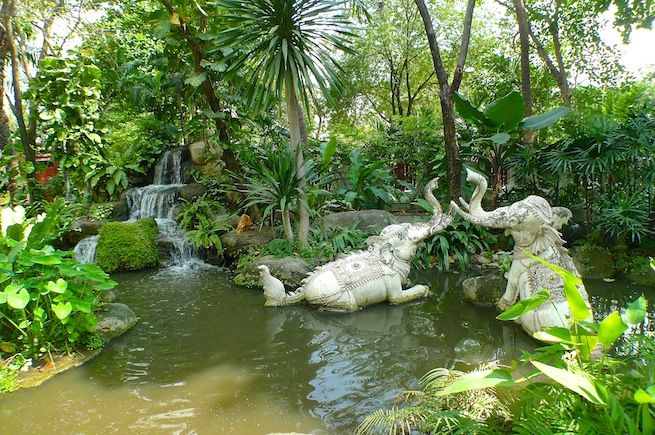
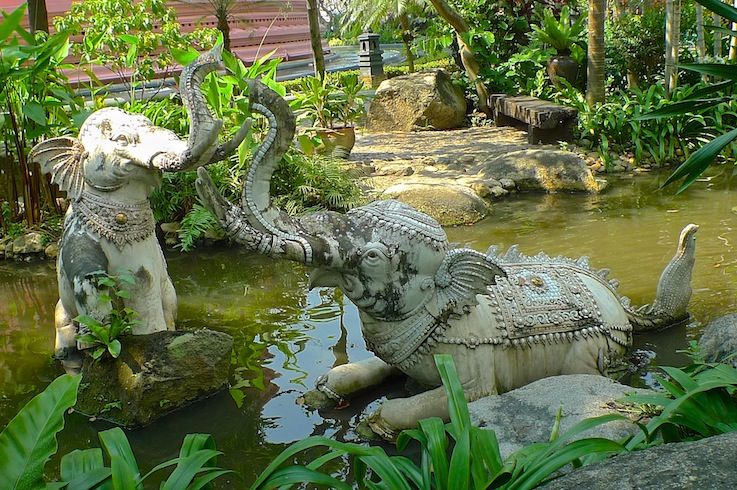
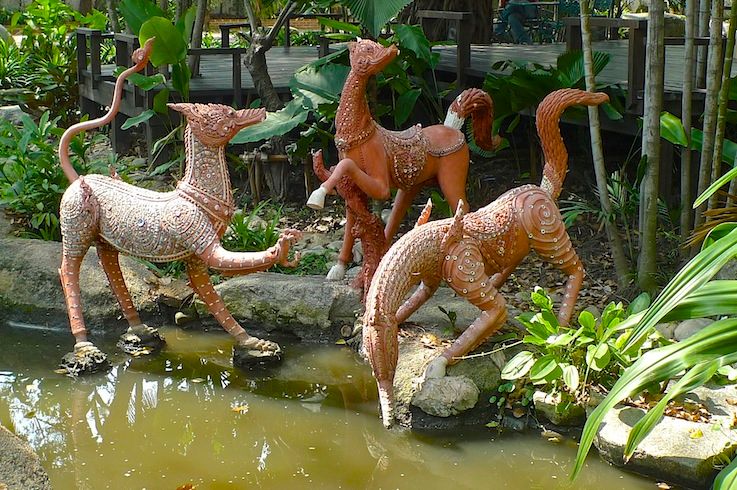
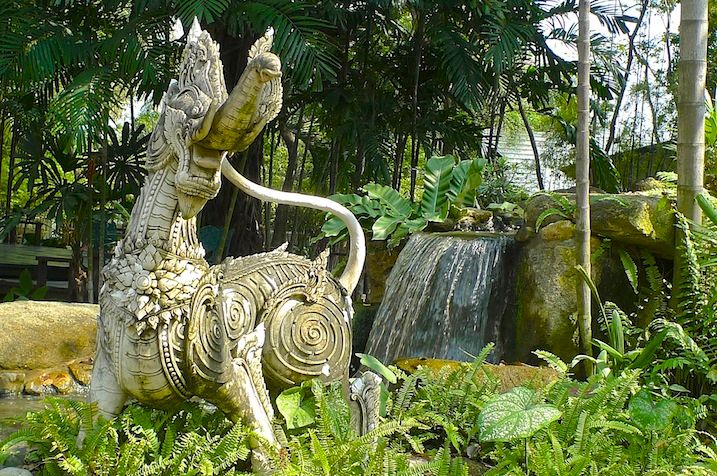
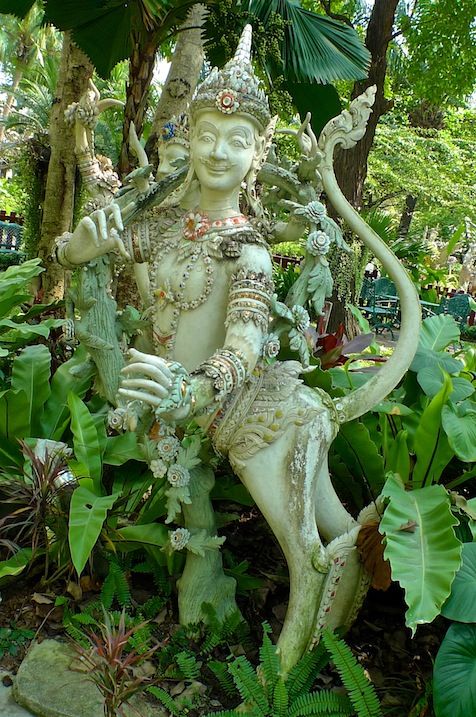
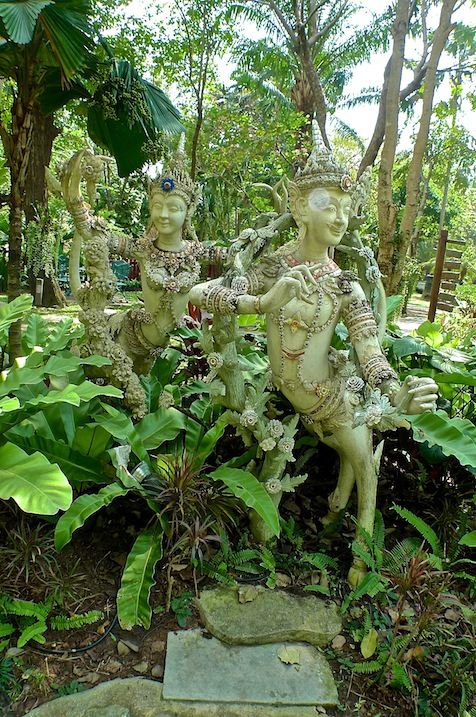
Besides flowers and plants, there were many detailed Thai sculptures.

 photo P1190549_zps75a10bf8.jpg

Two elephants playing in the water.

 photo P1190546_zpsdfe3dda1.jpg

 photo P1190582_zpsaf89d0a1.jpg

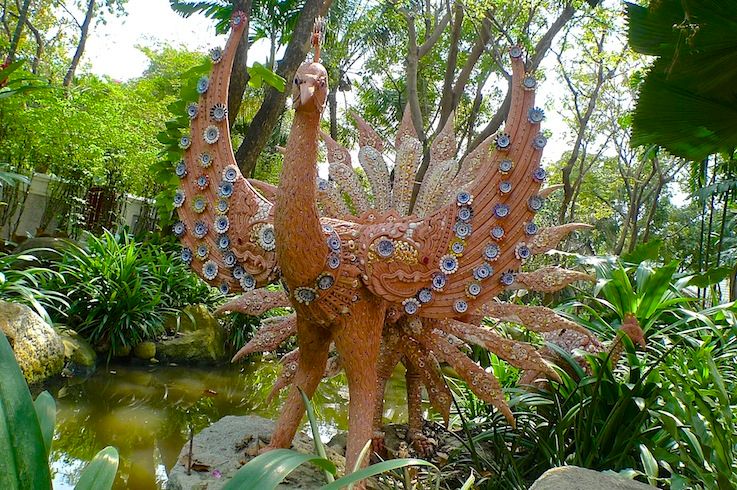
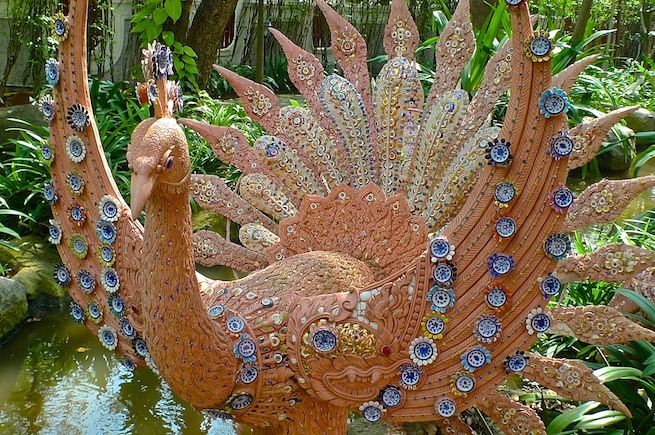
An amazingly beautiful peacock!

 photo P1190552_zps9108f96f.jpg

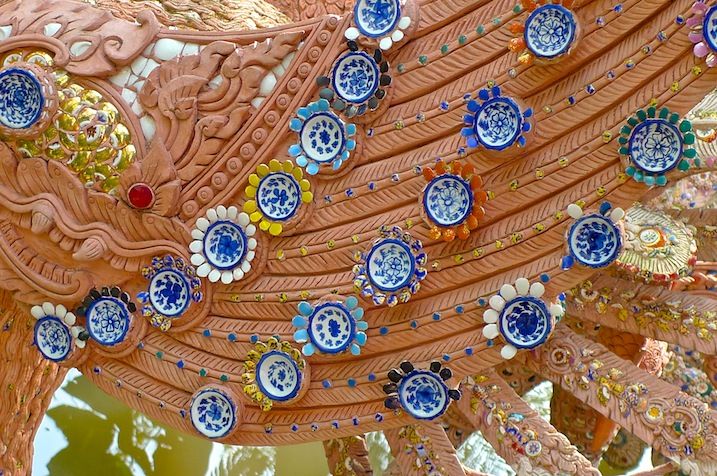
Can you see those ceramic bowls adorning the peacock's body and wings?

 photo P1190559_zps8e8129c6.jpg

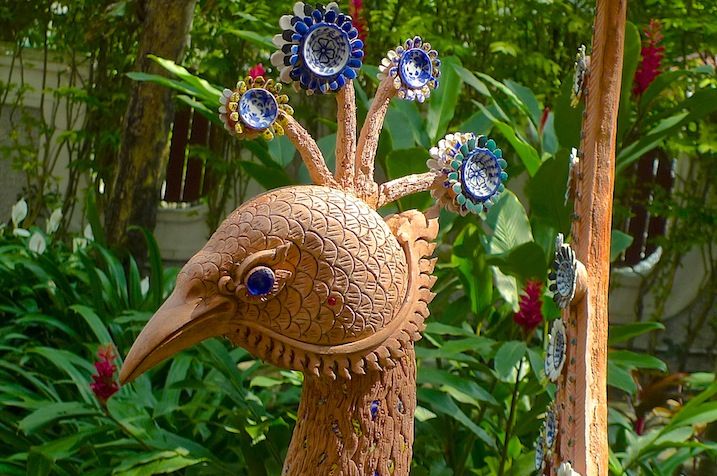
A close-up shot of its head.

 photo P1190557_zpsa1b24b49.jpg

Ceramic bowls were used just like the decorations I had seen inside the Museum!

 photo P1190555_zpsf3fdf7b1.jpg

Not sure what animals these were. More like mythical creatures than real animals.

 photo P1190566_zpsda1e3319.jpg

More sculptures which I did not know the names to.

 photo P1190576_zpsf650674d.jpg

 photo P1190584_zpscb8a0c11.jpg

There were many more sculptures but I did not take photos of them all.

 photo P1190585_zpsa1d92da0.jpg

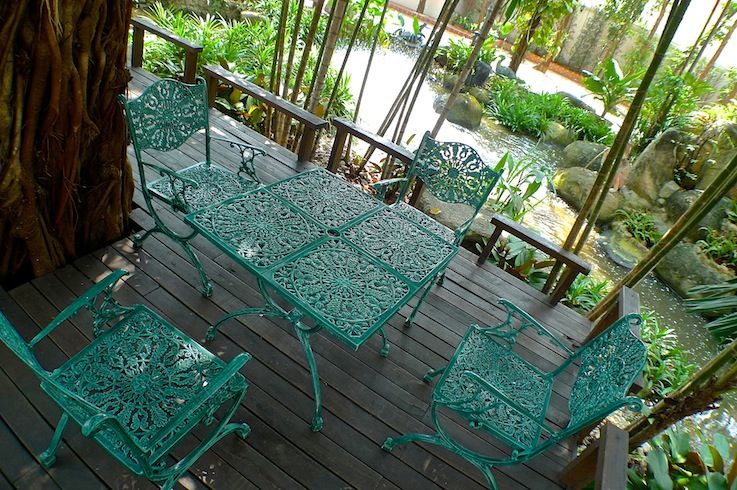
Garden table and chairs to rest your weary legs after strolling the garden.

 photo P1190567_zps18491180.jpg

By the time we were done with nice garden, I was already feeling a little hungry. We stepped into the souvenir shop and bought a few souvenirs. After that, it was time to leave for lunch!

Overall, I had a great time at the Erawan Museum. If you happen to visit Bangkok, do not miss what I consider a rather under-rated tourist attraction!

Address : 99/9, Moo 1, Bangmuangmai, Samut Prakan, Thailand 10270
Website : http://www.erawan-museum.com
Opens : 8am - 5pm daily
Admission Fee : 300 baht (adult), 150 baht (children)

Direction : Take the BTS Skytrain Sukhumvit line and alight at the last station i.e. Bearing BTS Station. Take a taxi to the Museum which is just 5 km south from the station.

Coming Up Next : My Lunch At Polo Fried Chicken

FIRST COMMENTER
Wishing on a Falling Star

The Erawan Museum In Bangkok (Part 1)

Posted by : foongpc | Sunday, June 2, 2013 | Published in

ADVERTISEMENT


I have been to Bangkok many times but surprisingly, I have never heard of the Erawan Museum until my last visit in January this year.

When my friend and I got out of the taxi, we were certainly not prepared to see a huge, gigantic three-headed elephant in front of us!


The sight of the elephant which reaches 44 metres in height was so amazing my jaw almost dropped!

The spot where we alighted from the taxi was however not the entrance into the museum. It was a shrine for people to pray in front of the Elephant without entering the museum. We had to walk a little bit further round the corner to reach the front gate.


The Erawan Museum, located in the Samut Prakan district, does not seem to be in the mainstream list of tourist attractions in Bangkok. I wonder why, as it was to me, one of the most fascinating museums I have ever visited!


I said fascinating because this is not just any normal museum, but rather a combination of an elaborately created museum and temple. After exploring the whole place, I realized the museum is an all-in-one showcase of history, culture, religion, spirituality, architecture and art!


The word Erawan is a Thai name for the three-headed elephant, which is actually a depiction of Airavata, the white elephant that carries the Hindu God Indra according to Indian mythology.

The museum was the brainchild of the late, eccentric Thai business tycoon Lek Viriyabhun, who originally built it to show his vast collection of Asian antiquities, but soon ended up as something much bigger.

As we walked along the pathway from the front gate, I could not take my eyes off the giant elephant statue. I could not wait to see it up close!


We first proceeded to the ticket booth. The entrance ticket costs 300 baht (USD9.90 / RM30.60) per adult. A little pricey perhaps, but I think it's still worth it.


The museum building was divided into 3 levels - the Basement or Suvarnabhumi (which represents the Underworld), the Hall (which represents Earth or the human realm) and inside the Elephant's belly (which represents Heaven).

Yes, you read that right. You can enter the Elephant's belly! And I thought it was just a giant statue on top of the museum!


Surrounding the museum is a beautiful tropical flower garden complete with mythical Thai sculptures and running water. More about this garden later.


This is how the colossal three-headed copper elephant looks like against the cloudy blue sky.


It was such an incredible sight I do not think my poor quality photo can do it justice. You just need to be there to see it for yourself!

Weighing about 250 tons, this gigantic elephant took almost 10 years to construct!


There's a stream surrounding the circumference of the base of the museum. I was immediately distracted by a couple kneeling at one end of the stream.


What were the couple doing?


I soon learnt that they were floating lotus flowers on the stream. There were in fact, many lotus flowers traveling on the stream. Can you see them?


Now here's something interesting. The price of admission actually gets you a lotus bud, which you can then send it floating into the stream after you have made a wish. According to the locals, if the lotus flower floats all the way to the end of the stream surrounding the museum, your wish will come true!


But if your lotus flower gets snagged and stops before making it around the museum, then your wish will not materialize. Perhaps you will need to buy more lotus flowers and try to make a more realistic wish! LOL!


Besides floating lotus flowers, you can also throw coins like what these two ladies were doing.


Can you see where all those coins landed? They should not land inside the water or your wish will not be granted, or so it seems.


Another lady seen here releasing her lotus bud on the water.


I did not really believe in the wish-granting lotus flower theory but that did not stop me and my friend from trying it out! LOL!


After making our wishes, both my friend and I released the lotus flowers into the stream. We followed the flowers as they moved along the stream, hoping they would not stop halfway.


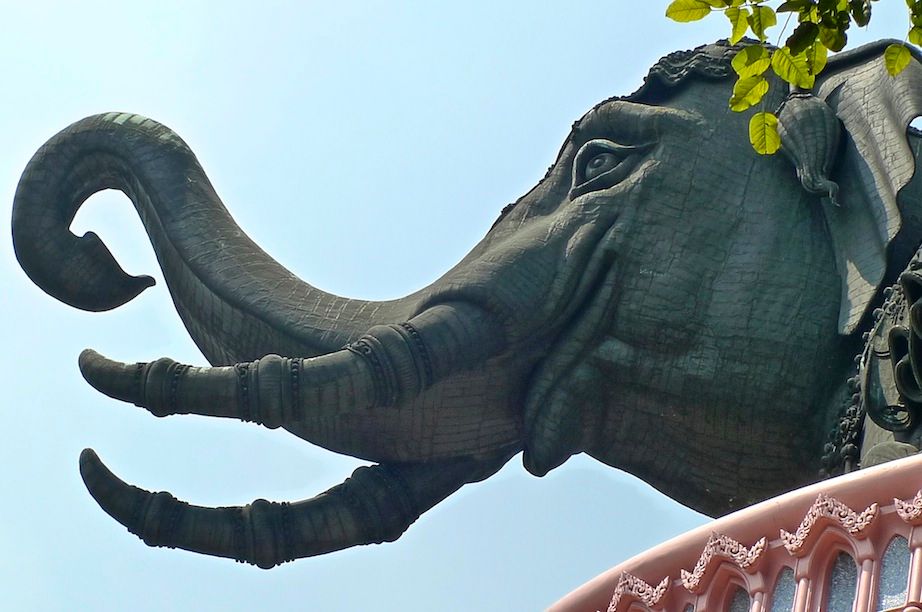
Midway, I was distracted by one of the elephant's head and tusks hovering above us. It sure looked incredible from here!


We reached the end of the stream, but where were our lotus flowers? No where to be seen. Our wishes had just gone down the drain! Oh well, at least it was fun. LOL!


It was time to enter the museum proper. But first let's take a look at the rules and regulations.


We entered the Basement first. It represents the Underworld, according to the Buddhist conception of the Universe. Photography was not allowed here so sorry, no photos. It mainly houses a collection of antique ceramics and art, probably most of them belonging to the founder Lek Viriyabhun. The Basement felt like a real museum to me.

After that, we moved on to the Hall or the large central area above the Basement.


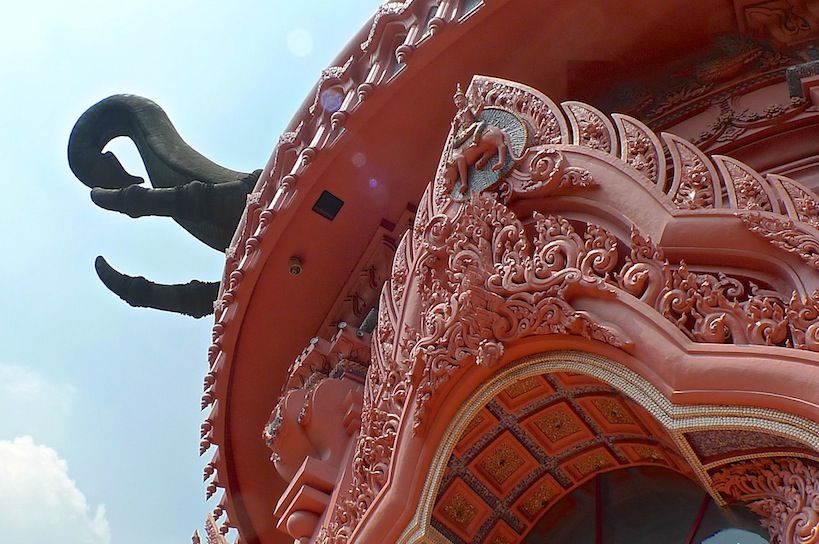
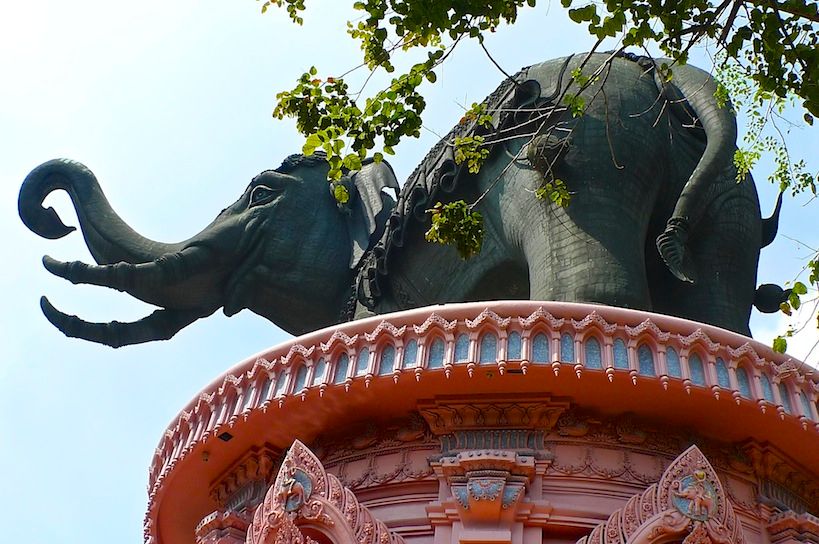
The intricate design on the exterior part of the building was interesting.


A close-up shot of the carvings.


The view from outside the Hall with part of the Elephant's tusks in the photo.


More detailed carvings.


Magnified.


As I entered the Hall which was said to represent both the human realm of the Buddhist universe and Mount Meru, the centre of the Hindu universe, I was stunned by what I saw.

What? Stained glass windows? Christianity?!


To be continued ....

FIRST COMMENTER

MPG